Case Study · Resolution Services Center
From abstract AI
to a practical roadmap.
How a comprehensive AI Business Audit mapped four critical workflows, identified ten opportunities, and prioritized six solutions designed to create organizational capacity.

Strengthening a mission-driven organization’s capacity to grow.
Resolution Services Center of Central Michigan is a nonprofit organization providing mediation, restorative justice, and conflict-resolution services through partnerships with schools, courts, community organizations, and other referral sources.
The organization wanted to increase referrals, diversify funding, build recurring partnerships, and better understand how AI could support its growth and operations.
Leadership knew AI could help—but the most valuable starting points were not yet clear.
Outreach, referral relationships, donor activity, and follow-up were not managed through one centralized system. Program documentation required extensive manual review, case information moved between paper forms, Google Sheets, and external systems, and financial and grant reporting included repetitive manual work.
AI use was also uneven across the organization. Some staff were experimenting with tools, while others were unsure how AI applied to their roles.
“Our biggest challenge was not understanding our pain points and where AI could be helpful for that.”Yarden Blumstein, Executive Director
- Decentralized referral and relationship tracking
- Manual outreach and follow-up
- Paper-based and duplicate case documentation
- Repetitive funding and grant research
- Manual financial and grant reporting
- Uneven AI confidence across staff
The audit
Listening across roles, mapping the work, and prioritizing what could create meaningful value.
Clarity & Capability interviewed the Executive Director, Program Manager, and Finance Coordinator, then presented the audit findings the following week. Each opportunity was evaluated for strategic alignment, organizational impact, technical complexity, and estimated cost.
“It moved AI from an abstract concept into a practical needs discussion.”Yarden Blumstein, Executive Director
A phased plan built around the organization’s actual workflows.
The audit identified ten potential AI opportunities and prioritized six for implementation planning. The recommendations focused on creating stronger visibility, reducing repetitive work, and supporting sustainable adoption across the organization.
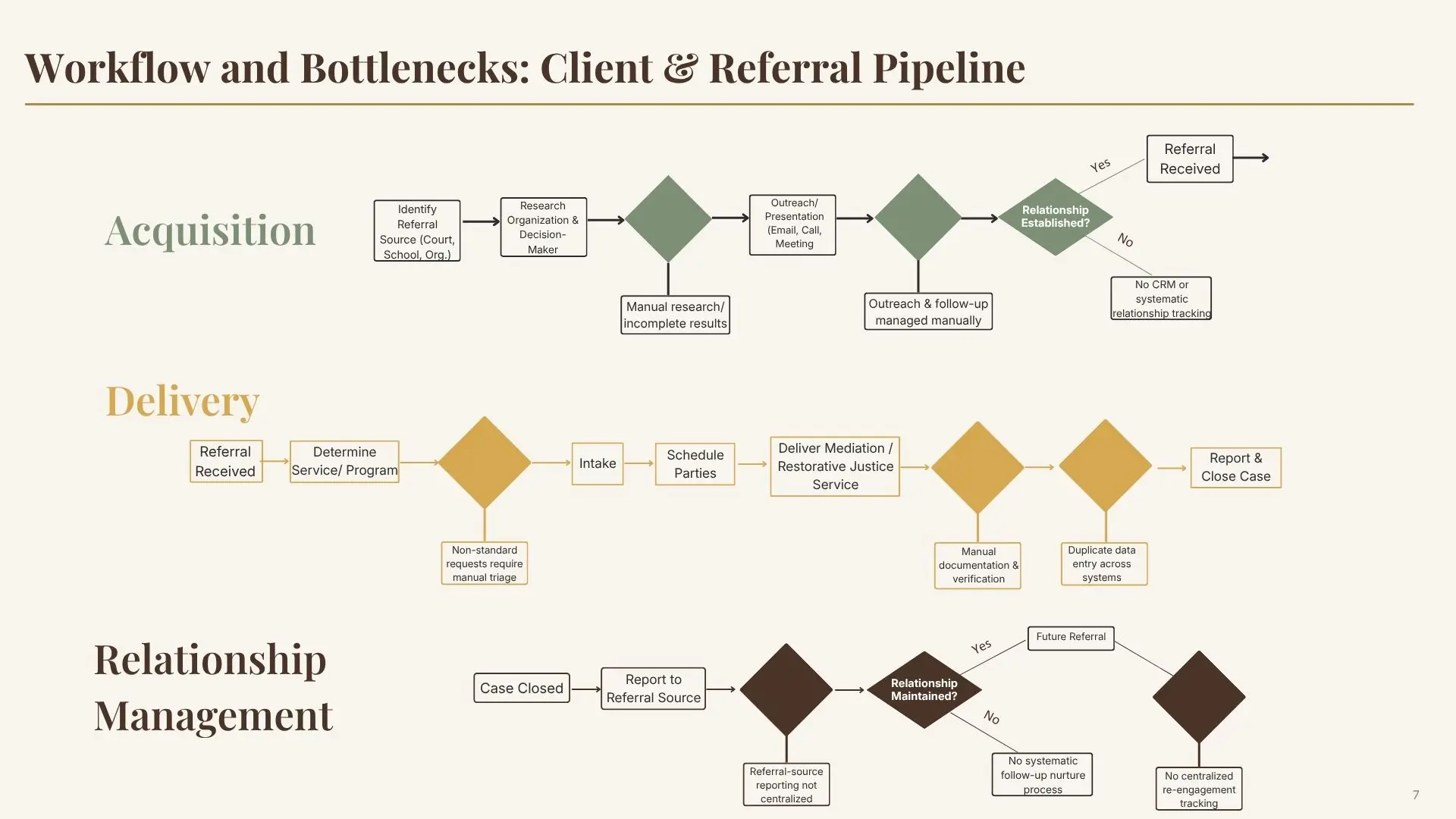
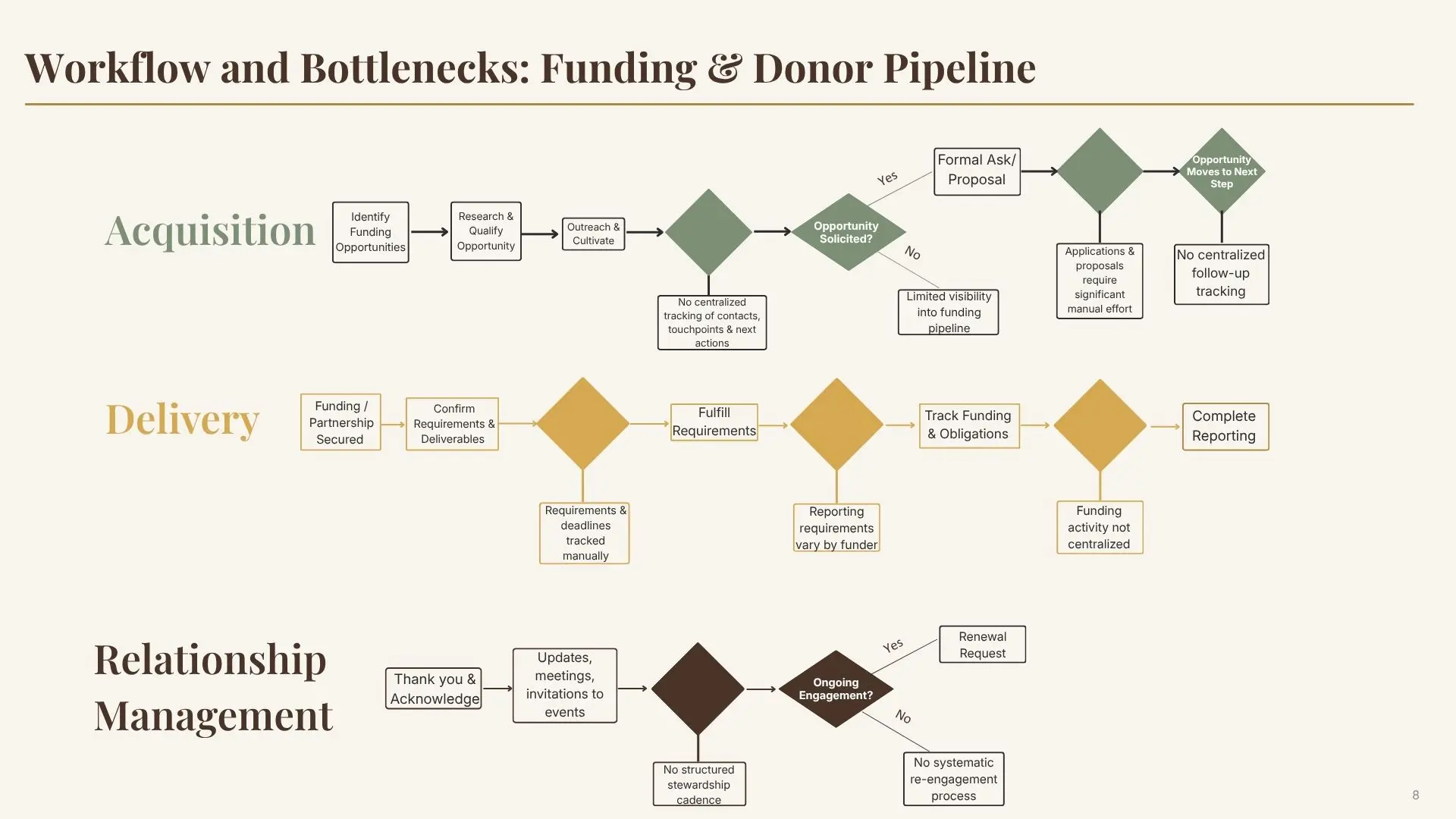
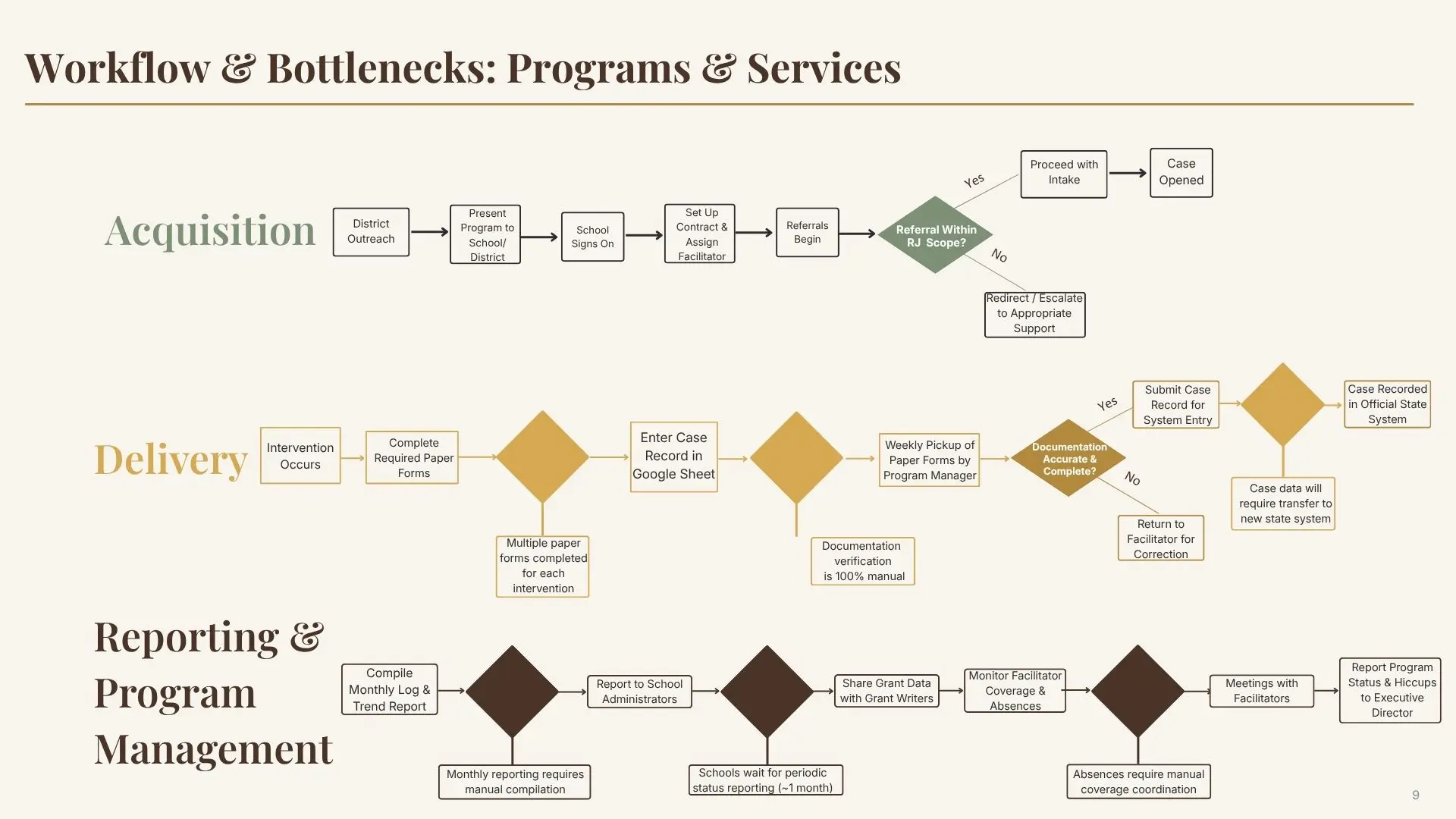
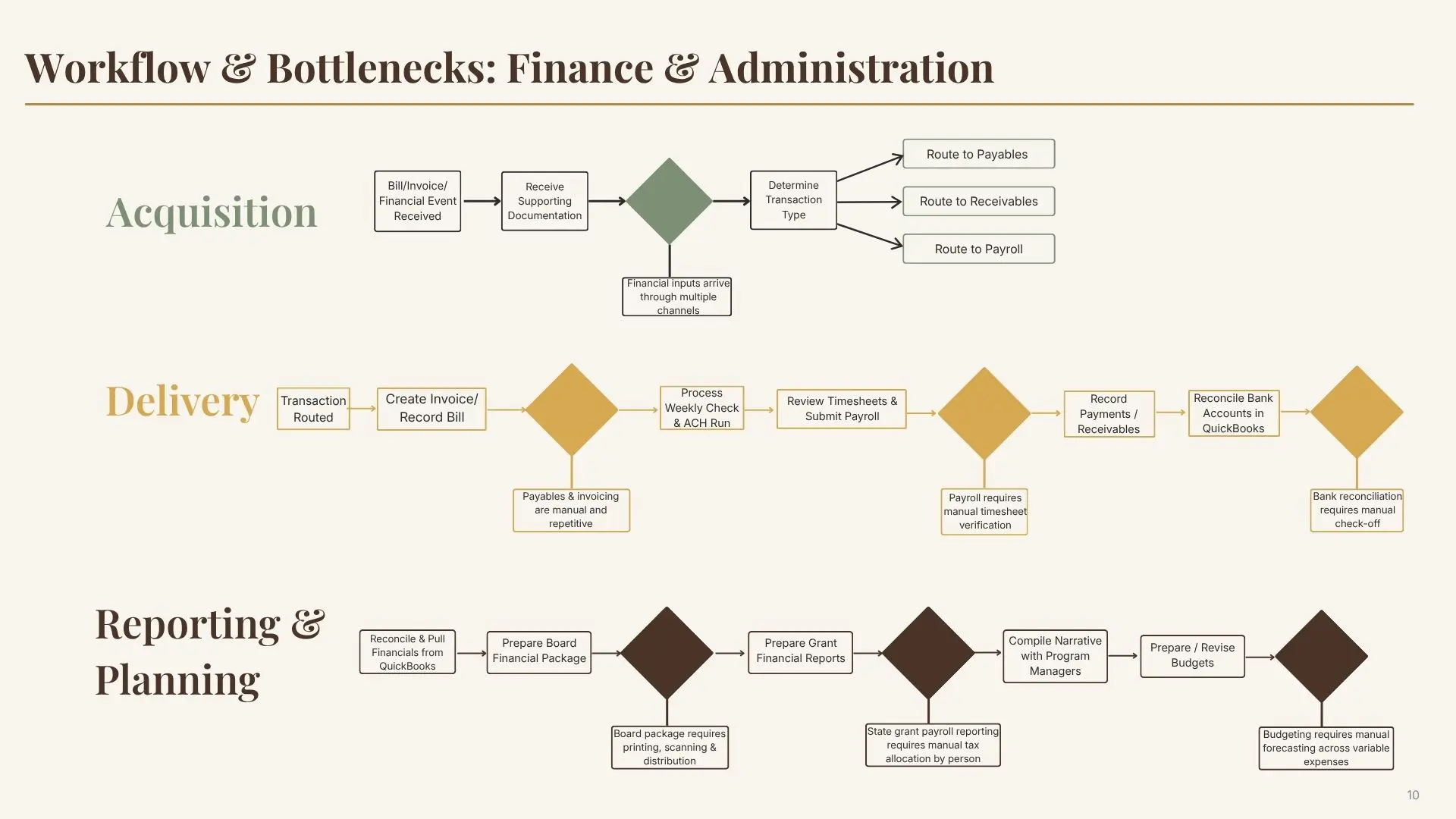
Workflow evidence
Four critical areas were mapped to reveal bottlenecks, handoffs, and missed opportunities.
Modeled opportunity
A clear path from scattered pain points to prioritized action.
These figures are modeled projections from the audit and implementation plan—not verified post-implementation results. Implementation has not begun.
- Documented pain points and bottlenecks
- Prioritized AI opportunities
- Business-impact estimates
- Phased implementation roadmap
- Clearer organizational AI readiness
“The most valuable part was getting a clear sense of the scope and possibility of what AI could actually be doing for our organization. It gave us a much broader view than we had going in. Understanding our bottlenecks helped us identify where AI could step in and where we were slowing ourselves down, revealing opportunities to work more efficiently.”
“I would recommend it to other organizations in our industry.”
Yarden Blumstein · Executive Director, Resolution Services Center of Central Michigan
Your next step